Shading loss vs tilt loss: which one actually caps a roof's output
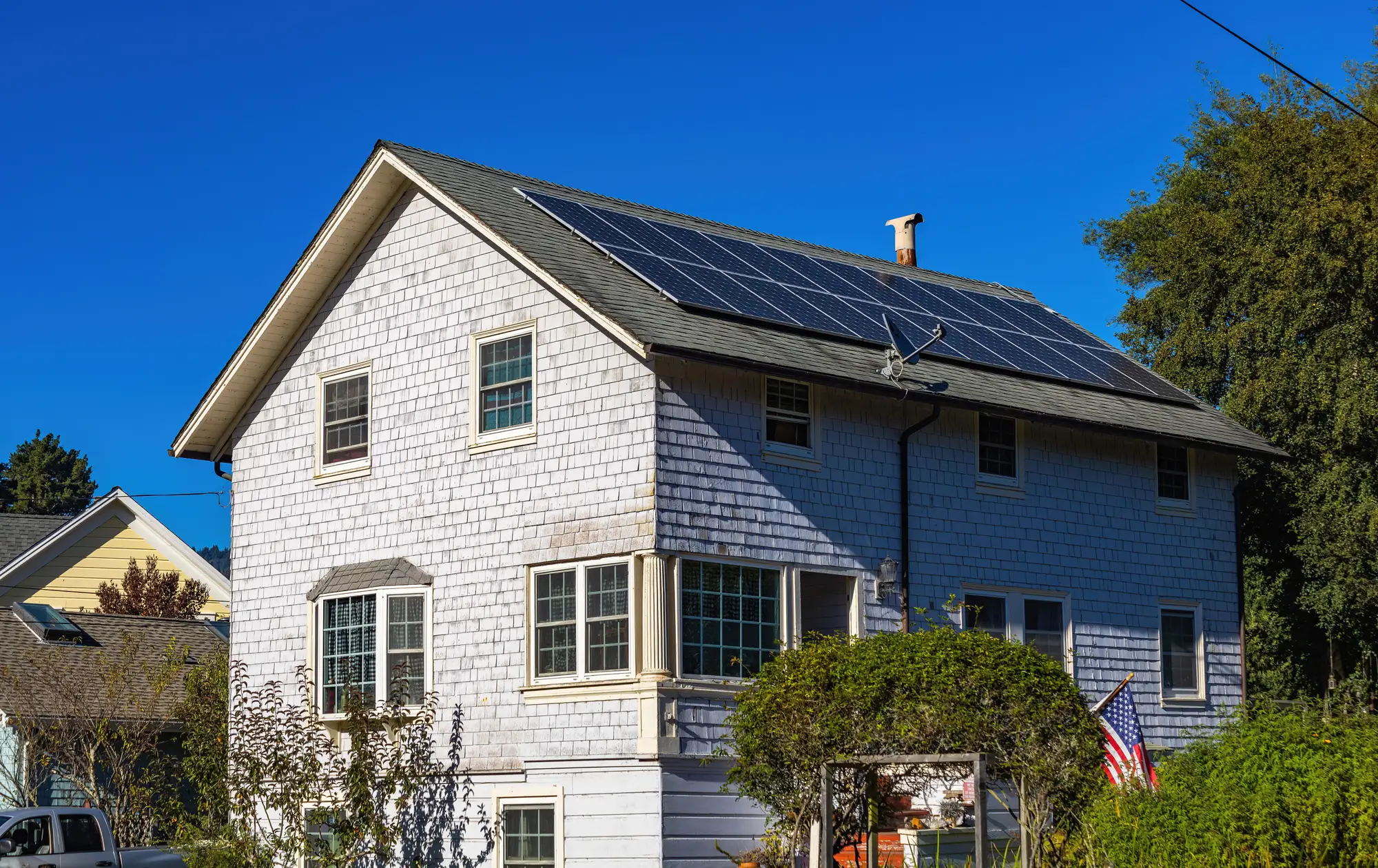
When a feeder's hosting capacity study comes up short, the usual culprit gets named fast: too much south-facing roof, not enough shade. But that instinct skips a step. Tilt and shading don't knock down a roof plane's output the same way, and mixing them up in a feeder-level forecast is how a planner ends up over-building for DER that was never going to show up, or under-building for a block that fills in faster than the model expected.
Tilt loss is a geometry problem
Tilt loss comes from the angle between a roof plane and the sun's path. A plane pitched at 35° in a moderate-latitude feeder territory sits close to its theoretical peak. Drop that to a 12° low-slope commercial surface, or push it past 50° on a steep residential gable, and the plane loses some share of the irradiance it could otherwise catch. It's a fixed, predictable penalty baked into the pitch and the site's latitude. A flat surface in Phoenix and a flat one in Minneapolis take a different hit, but for a given plane in a given feeder territory, tilt loss doesn't change year to year. It's the same every January and every July, barring a shingle replacement.
Tilt loss is easy to model and, frankly, easy to overrate. A gentle 15-20° miscalibration from true optimal tilt usually costs a roof plane a modest single-digit percentage of output, something an inverter oversize or a slightly larger array absorbs without much drama.
Shading loss is a site problem, and it moves
Shading loss is a different animal. It comes from whatever blocks sun on that specific plane: a neighbor's oak that's taller this year than last, a parapet wall, a rooftop HVAC unit, an adjacent building's shadow sweeping across the array at 4pm in December. Shading loss depends on everything around the plane, and it changes as trees grow, as buildings go up on adjacent lots, and as the sun angle shifts through the seasons.
A roof plane with a perfect 30° south-facing tilt can still be a poor adoption candidate if it sits under a mature canopy that shades 40% of the panel area for half the day. Meanwhile a mediocre 10° east-facing plane with zero obstruction can out-produce it. In a lot of feeder territories, especially older residential blocks with established tree cover, shading is the bigger output cap, not tilt. Tilt loss sets a ceiling; shading loss is what keeps most roofs from reaching it.
Why this split matters for a feeder forecast
For DER load forecasting, treating tilt and shading as one combined "solar viability" score flattens a distinction that matters. Two feeders can show the same average tilt loss and look identical on a rooftop PV potential layer, but if one has heavy tree cover and the other doesn't, the usable roof area, the share of roof plane square footage that clears a minimum output threshold worth counting, will differ substantially. That difference shows up as adoption timing: the open feeder fills in faster once incentives hit, the shaded one lags even with comparable roof stock.
This is also why roof plane viability scoring has to run per-plane, not per-building. A hip roof can have four planes with four different azimuths, and the south- and west-facing planes might clear shading and tilt thresholds while the north-facing plane never will, regardless of how the roof pitch looks from the street. Scoring azimuth and tilt without checking what's blocking the plane this year, or scoring shading without accounting for a plane's geometry, both undercount or overcount usable roof area in ways that compound across a whole feeder.
Rooftop Solar Potential breaks a feeder's roof stock down to the individual plane, scores azimuth, tilt, and shading loss for each one, and rolls that up into a usable roof area layer you can lay against your feeder boundaries at rooftopsolarpotential.com. It also re-checks the same roofs annually to flag which ones went from bare to panelled, so the viability score stays tied to what's showing up on the ground, not just what the geometry allows.
If you're trying to separate which feeders are capacity-constrained by roof geometry versus shading, that per-plane breakdown is worth a look.