Skylight or solar panel? What trips up rooftop PV detection
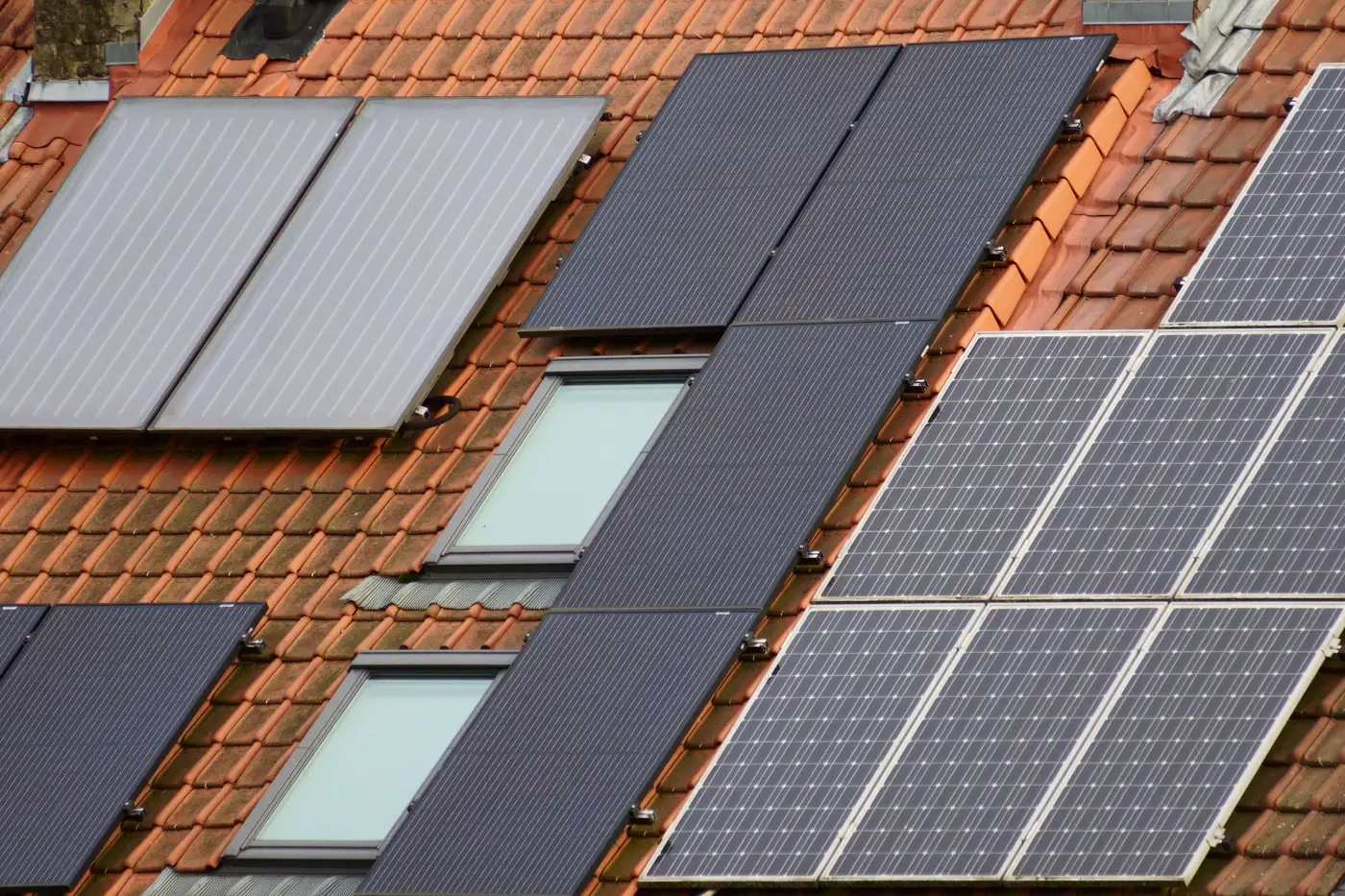
If you track rooftop PV adoption by feeder, you've probably had a quarter where the count jumped and the interconnection queue didn't match it. Nine times out of ten, when we've gone back and looked at what tripped the detector, it's a skylight, not a panel.
At 0.5 m GSD, a skylight and a residential PV module read almost the same to an automated classifier. Both are rectangular, both sit flush in a roof plane, both can throw a bright flash back at the sensor depending on sun angle and pass time. A single-object detector trained mostly on shape and reflectance is going to false-positive on skylights, roof hatches, and even some dark-colored ridge vents. That's a real problem if your adoption count feeds a load forecast instead of a curiosity dashboard.
Why the confusion happens at the pixel level
VHR imagery is good enough to resolve a roof plane into its component features. It's not always good enough, on a single still, to resolve the texture difference between tempered glass and photovoltaic glass with an anti-reflective coating. Both can saturate the same way under a high sun angle. A skylight oriented south at a decent tilt will score well on the same azimuth and shading checks you'd run for solar viability, which is exactly backwards: the feature that looks most "panel-like" on paper is often the one that isn't a panel at all.
This is where single-frame detection runs into trouble. One image, one angle, one moment of glint, and a skylight on a well-oriented plane can outscore an array sitting in partial shade.
What tells them apart on a roof plane
A few things separate the two reliably, once you're looking at the plane and not just the pixel cluster:
- Grid pattern. Panels have a repeating cell grid, usually visible as fine parallel lines across the module. A skylight is a single uninterrupted glass surface, or at most a frame around the edge.
- Modularity. Real PV shows up as rows and columns, not a lone rectangle. One isolated dark rectangle on an otherwise bare plane is a better candidate for a skylight, vent, or hatch than for an installed array, which almost never goes in as a single module.
- Position on the plane. Skylights tend to sit mid-plane, over a room below, isolated from the eave. Arrays run parallel to the eave line and usually respect the plane's rack-mounting geometry, which skylights have no reason to follow.
- Change behavior over time. A plane that's bare one year and shows a dense, regularly spaced array the next is adoption. A plane with the same single rectangle in the same spot across multiple annual passes is a fixture, and shouldn't be counted as a change at all.
That last point is the one most single-pass tools miss, because they're not built to compare the same plane against itself a year later.
Why it matters for your feeder numbers
A skylight misclassified as a panel doesn't just add noise to a map. It adds a phantom customer to your behind-the-meter generation estimate for that feeder, and if your DER forecast rolls that count up to a substation level, the error compounds across every roof with a skylight on a good south-facing plane. Roof-level detection that scores each plane individually, rather than tagging a parcel as "has solar" or doesn't, catches this because it can flag a single static rectangle as a fixture rather than new capacity. Rooftop Solar Potential scores azimuth, tilt, and shading plane by plane and re-checks the same roofs on the next annual pass specifically to separate a roof that stayed the same from one that actually went from bare to panelled.
If false positives like this are showing up in your adoption counts, it's worth seeing what a plane-level, year-over-year pass looks like for your service territory.