How to spot a new rooftop solar install in satellite imagery
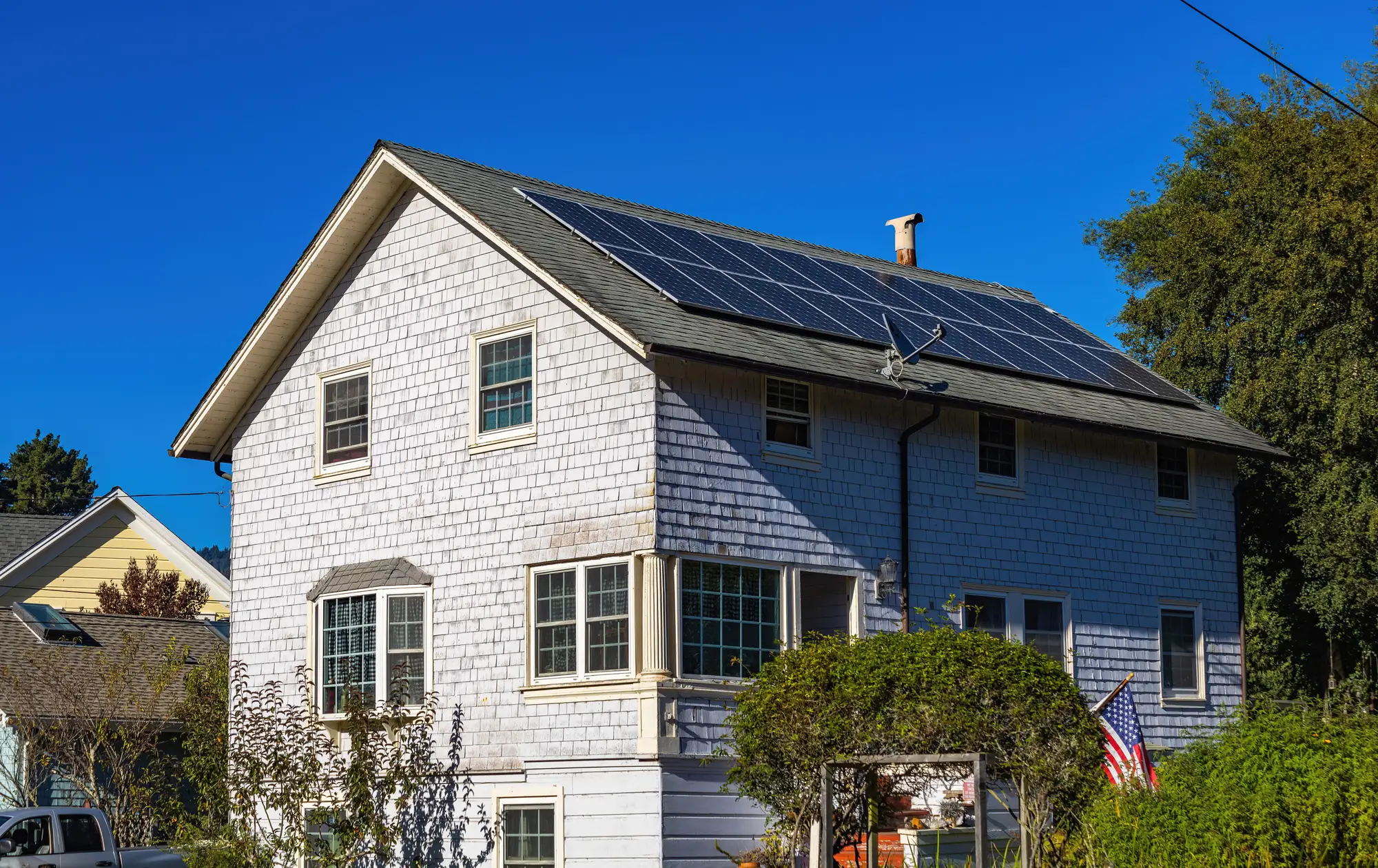
If you've spent any time scrolling through two years of VHR imagery side by side, trying to figure out which rooftops on your circuit switched to solar versus which ones just got a new roof coating, you know the visual tells aren't always obvious at 30 cm or even sub-0.5 m resolution. A navy-blue membrane roof can look a lot like a panel array from straight overhead, and a skylight bank can throw a shadow pattern that reads as module rows if you're moving fast through a tile set. Here's what separates a confirmed install from a false positive when you're working a feeder-level adoption count by hand.
What a panelled roof looks like from above
Panel arrays show up as a regular grid: straight parallel seams at consistent spacing, usually aligned to one or two roof planes rather than scattered across the whole structure. The surface reflectance drops compared to bare shingle or membrane, so arrays read darker than the surrounding roof, with a visible margin of exposed roofing material around the array edges (racking setbacks, fire-code clearances, vent penetrations the installer routed around).
Look for a few more corroborating details before you call it:
- A shadow line along the row edges on a sun-angle pass, which bare roofing won't produce
- A new conduit run visible along the eave or down the wall to a meter location, if GSD is fine enough to catch it
- No change in roof color elsewhere on the structure. A full re-roof changes the whole plane uniformly; a PV install only darkens the area under the array.
The azimuth and tilt of the array should roughly match a plausible south-facing (or site-optimal) roof plane. If you're seeing a dark rectangular pattern on a north-facing dormer with heavy tree shading, treat it as a flag for manual review rather than an automatic count. That's the false positive that inflates an adoption number a planner then has to explain in a hosting-capacity meeting.
Why a single pass isn't enough
One frame tells you panel or no panel. It doesn't tell you whether that roof was bare last year. Spotting a new install, the thing that matters for DER load forecasting, means comparing the same roof plane across two dated captures and flagging the ones that changed state from bare to panelled. That's the annual-pass logic: fly the same footprint once a year, hold the roof-plane geometry constant, and diff the surface condition on each plane year over year.
Adoption on a feeder rarely moves in big visible jumps. A circuit might pick up six to ten new residential installs annually out of a few hundred rooftops, and none of them stand out on a single glance at a wide area. You're hunting for a handful of state changes across a large population of roof planes, a change-detection task that only surfaces by comparing consecutive annual passes.
It also means the imagery cadence has to match what you're measuring. Pulling permit filings gets you installs that got inspected and closed out, which lags energization by months in a lot of jurisdictions, and it tells you nothing about the roof geometry, azimuth, tilt, usable square footage, that drives how much a given install can push back onto your circuit at solar noon. A windshield survey catches what a driver can see from the street, which on a lot of lots is one roof plane out of three or four.
When to trust the call and when to send someone out
Clean signal: a dark, regularly-spaced grid on a south- or west-facing plane, no corresponding color change elsewhere on the roof, consistent with last year's bare capture of the same plane. Call it an install.
Ambiguous signal: uniform color change across the entire roof (probably a re-roof), heavy tree canopy obscuring the plane, or a roof material that's naturally low-reflectance (some architectural shingle, older EPDM). Flag it and let a field crew or interconnection record settle it.
If you're doing this roof by roof across a whole substation territory on an annual pass, the roof-plane and shading-loss scoring is exactly the groundwork that Rooftop Solar Potential builds once a year, so you're working from a pre-scored usable-area layer instead of eyeballing every rooftop change yourself. If your adoption counts are still coming from permit pulls and windshield surveys, it's worth seeing what a feeder-level map of usable roof area and year-over-year install flags looks like for your territory.