How to estimate installed PV capacity from a rooftop panel count
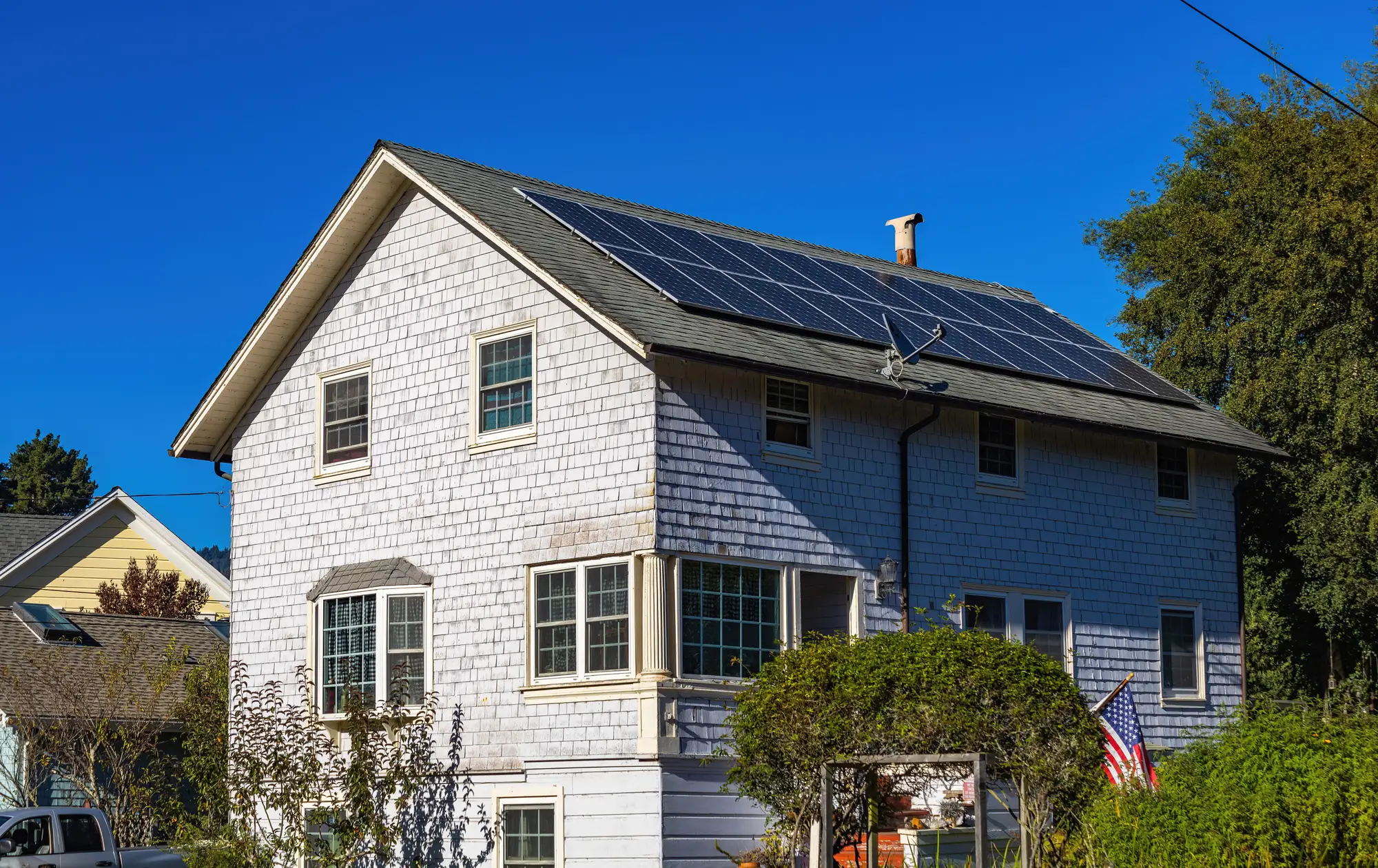
When a new interconnection application lands with a panel count but no system-size field filled in, or when you're trying to sanity-check what's on a circuit versus what the queue says should be there, you end up doing the same arithmetic every planner has scratched out on a legal pad at some point. Panels times watts. It's not hard math. The hard part is getting the inputs right, and knowing when the output is close enough to trust.
Panel count to nameplate capacity: the quick math
Multiply the panel count by the module's rated wattage and you get DC nameplate capacity. Most residential modules shipping today sit somewhere in the 400-440W range, so a 24-panel roof lands around 9.6-10.6 kW DC. Older installs, the ones that went in before 2018 or so, often used panels in the 250-320W range, so a panel count alone without a rough install-year guess can send you high or low by a third.
A few things complicate the conversion beyond module wattage:
- DC-to-AC derate. Nameplate capacity as filed is almost always DC. The inverter's AC output, which is what shows up as generation on the circuit, typically runs lower because of clipping ratios designers use on purpose to size inverters cheaper than the full DC array.
- String versus microinverter systems. Microinverter and power-optimizer setups report per-panel output more cleanly, which matters if you're trying to back into capacity from partial panel counts on a multi-plane roof.
- Panel count from imagery isn't always a clean count. Shadows, ridge lines, and low sun angle can hide a panel or split one module into what looks like two. A count off by two or three panels moves a mid-size system's capacity estimate by close to half a kW.
None of this makes the panel-count method useless. It's the fastest way to get a defensible capacity number when you don't have a permit record or an AMI feed to cross-check against. It's just not precise enough to treat as gospel at the individual-premise level, which is fine, because feeder-level forecasting cares about aggregate capacity across dozens or hundreds of roofs, not the exact wattage of one house.
Roof plane area to kW conversion
Sometimes you don't have a clean panel count at all, just a roof plane and a rough sense that it's covered. In that case, work backward from area. A standard 60-cell residential module footprint runs around 1.7-1.8 square meters. Divide usable roof plane area by that figure to get an estimated panel count, then apply the wattage assumption above.
The catch is "usable." Raw roof plane area overstates what actually gets paneled. Installers leave setbacks for fire code access, route around vents and roof penetrations, and skip any section with afternoon shading from a neighboring tree or a taller section of the same roof. On a typical hip or gable roof, usable area after those deductions often runs meaningfully below the raw plane measurement, which is why azimuth and shading scoring per plane, not just total square footage, is what turns a rough area-to-kW estimate into something you'd put in a feeder capacity model.
Where the manual version stops scaling
Doing this roof by roof works for spot-checking a handful of interconnection applications. It stops working once you're trying to build a capacity baseline across an entire feeder, or re-checking a service territory year over year to see which roofs went from bare to panelled. At that point you're pulling permits, cross-referencing county assessor photos, or sending someone out to drive the circuit, and none of those scale to annual cadence across a full territory.
That's the gap Rooftop Solar Potential is built around: scoring individual roof planes for azimuth, tilt, and shading loss from VHR imagery, then re-checking the same roofs annually to flag new installs by feeder.
If panel-count math is where your capacity estimates start and stall, it might be worth seeing what a feeder-wide roof plane layer looks like instead.